
Article


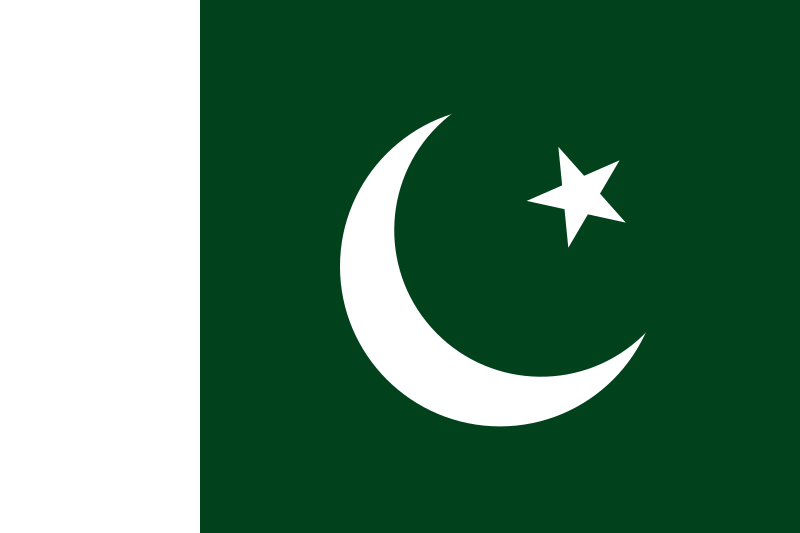

THE GREAT PAKISTAN officially the Islamic Republic of Pakistan (Urdu: اسلامی جمہوریۂ پاکستان), is a sovereign country in South Asia. It sits at the crossroads of the strategically important regions of South Asia, Central Asia and the Middle East. It has a 1,046-kilometre (650 mi) coastline along the Arabian Sea and the Gulf of Oman in the south and is bordered by India to the east, Afghanistan to the west and north, Iran to the southwest and China in the far northeast. It is separated from Tajikistan by Afghanistan's narrow Wakhan Corridor in the north, and it shares a marine border with Oman.
The territory of modern Pakistan was the site of several ancient cultures, including the Neolithic Mehrgarh and the Bronze Age Indus Valley Civilisation, and has undergone invasions or settlements by Hindu, Persian, Indo-Greek, Islamic, Turco-Mongol, Afghan and Sikh cultures. Thus the area has been ruled by numerous empires and dynasties, including the Indian Mauryan Empire, the Persian Achaemenid Empire, the Arab Umayyad Caliphate, the Mongol Empire, the Mughal Empire, the Durrani Empire, the Sikh Empire and the British Empire. As a result of the Pakistan Movement led by Muhammad Ali Jinnah and India's struggle for independence, Pakistan was created in 1947 as an independent nation for Muslims from the regions in the east and west of India where there was a Muslim majority. Initially a dominion, Pakistan adopted a new constitution in 1956, becoming an Islamic republic. A civil war in 1971 resulted in the secession of East Pakistan as the new country of Bangladesh.
Pakistan is a federal parliamentary republic consisting of four provinces and four federal territories. With a population exceeding 170 million people, it is the sixth most populous country in the world and has the largest Muslim population after Indonesia. It is an ethnically and linguistically diverse country, with a similar variation in its geography and wildlife. Its semi-industrialized economy is the 27th largest in the world in terms of purchasing power. Pakistan's post-independence history has been characterized by periods of military rule, political instability and conflicts with neighbouring India. The country continues to face challenging problems, including terrorism, poverty, illiteracy and corruption.
A regional and middle power,[8][9] Pakistan has the seventh largest standing armed forces in the world and is a declared nuclear weapons state, being the first and only nation in the Muslim world, and the second in South Asia, to have that status. It is designated as a major non-NATO ally of the United States and a strategic ally of China. Pakistan is a founding member of the Organisation of the Islamic Conference (now the Organisation of Islamic Cooperation) and is a member of the United Nations, the Commonwealth of Nations and the G20 developing nations.
The society and culture of Pakistan (Urdu: ثقافت پاکستان) comprises numerous diverse cultures and ethnic groups: the Punjabis, Kashmiris, Sindhis in east, Muhajirs, Makrani in the south; Baloch and Pashtun in the west; and the ancient Dardic, Wakhi, and Burusho communities in the north. These Pakistani cultures have been greatly influenced by many of the surrounding countries' cultures, such as the Turkic peoples, Persian, Arab, some parts of South Asia, Central Asia, and the Middle East.
In ancient times, Pakistan was a major cultural hub. Many cultural practices and great monuments have been inherited from the time of the ancient rulers of the region. One of the greatest cultural influences was that of the Persian Empire, of which Pakistan was a part. In fact, the Pakistani satraps were at one time the richest and most productive of the massive Persian Empire. Other key influences include the Afghan Empire, Mughal Empire and later, the short-lived but influential, the British Empire.
Pakistan has a cultural and ethnic background going back to the Indus Valley Civilization, which existed from 2800–1800 B.C., and was remarkable for its ordered cities, advanced sanitation, excellent roads, and uniquely structured society. Pakistan has been invaded many times in the past, and has been occupied and settled by many different peoples, each of whom have left their imprint on the current inhabitants of the country. Some of the largest groups were the Proto-Indo-Aryans, of which Sindhis and Punjabis descend from and later Iranic peoples which the Baloch and Pashtuns descend from. Other less significant ones include the Greeks, Scythians, Persians, White Huns, Arabs, Turks, Mongols, Buddhists, and other Eurasian groups, up to and including the British, who left in the late 1940s.
The region has formed a distinct cultural unit within the main cultural complex of South Asia, the Middle East and Central Asia from the earliest times, and is analogous to Turkey's position in Eurasia.[1] There are differences in culture among the different ethnic groups in matters such as dress, food, and religion, especially where pre-Islamic customs differ from Islamic practices. Their cultural origins also reveal influences from far afield, including Tibet, Nepal, India, and eastern Afghanistan. All groups show varying degrees of influence from Persia, Turkestan and Hellenistic Greece. Pakistan was the first region of South Asia to receive the full impact of Islam and has developed a distinct Islamic identity, historically different from areas further west.[1]
Diwan-e-Khas: the hall of special audience with the emperor
Bahauddin Zakariya
Ancient sites in Pakistan include: Zoroastrian Fire temples, Islamic centres, shi'a shrines/Sufi shrines, Buddhist temples, Sikh, Hindu, and pagan temples and shrines, gardens, tombs, palaces, monuments, and Mughal and Indo-Saracenic buildings. Sculpture is dominated by Greco-Buddhist friezes, and crafts by ceramics, jewellery, silk goods and engraved woodwork and metalwork.
Pakistani society is largely multilingual, multi-ethnic and multicultural. Though cultures within the country differ to some extent, more similarities than differences can be found, as most Pakistanis are mainly of Aryan heritage or have coexisted side by side along the Indus River for several thousand years, or both. However, over 60 years of integration, a distinctive "Pakistani" culture has sprung up, especially in the urban areas where many of the diverse ethnic groups have coexisted and ithe country now having a literacy rate of 55%, up from 3% at the time of independence. Traditional family values are highly respected and considered sacred, although urban families increasingly form nuclear families, owing to socio-economic constraints imposed by the traditional culture of the extended family.
The past few decades have seen emergence of a middle class in cities such as Karachi, Lahore, Rawalpindi, Hyderabad, Quetta, Faisalabad, Sukkur, Peshawar, Sialkot, Abbottabad, and Multan. Rural areas of Pakistan are regarded as more conservative, and are dominated by regional tribal customs dating back hundreds if not thousands of years.
"Pakistan's culture is again unique like the rest of the country. Pakistan's geography is the meeting point of South Asia, Central Asia and West Asia/Gulf. Its culture could be termed as a combination of sub continental, Islamic, Regional, English, and more recently global influences. Let us consider them piecemeal. The newly born Pakistan had to have a sub continental leaning, having been a part of for last 5000 years of its civilization. However, the Indus Valley, present day Pakistan, culture was different from the rest of North India or South India".
So, i am very happy to see that the great PAKISTAN has joined the game.
make your country proud on you.
So, all new players of Pakistan I wish you all BEST OF LUCK.

Previous article:
Honesty is the best Policy (14 years ago)
Next article:
No Pain, No Gain (14 years ago)

About the game:

USA as a world power? In E-Sim it is possible!
In E-Sim we have a huge, living world, which is a mirror copy of the Earth. Well, maybe not completely mirrored, because the balance of power in this virtual world looks a bit different than in real life. In E-Sim, USA does not have to be a world superpower, It can be efficiently managed as a much smaller country that has entrepreneurial citizens that support it's foundation. Everything depends on the players themselves and how they decide to shape the political map of the game.
Work for the good of your country and see it rise to an empire.
Activities in this game are divided into several modules. First is the economy as a citizen in a country of your choice you must work to earn money, which you will get to spend for example, on food or purchase of weapons which are critical for your progress as a fighter. You will work in either private companies which are owned by players or government companies which are owned by the state. After progressing in the game you will finally get the opportunity to set up your own business and hire other players. If it prospers, we can even change it into a joint-stock company and enter the stock market and get even more money in this way.

In E-Sim, international wars are nothing out of the ordinary.
Become an influential politician.
The second module is a politics. Just like in real life politics in E-Sim are an extremely powerful tool that can be used for your own purposes. From time to time there are elections in the game in which you will not only vote, but also have the ability to run for the head of the party you're in. You can also apply for congress, where once elected you will be given the right to vote on laws proposed by your fellow congress members or your president and propose laws yourself. Voting on laws is important for your country as it can shape the lives of those around you. You can also try to become the head of a given party, and even take part in presidential elections and decide on the shape of the foreign policy of a given state (for example, who to declare war on). Career in politics is obviously not easy and in order to succeed in it, you have to have a good plan and compete for the votes of voters.

You can go bankrupt or become a rich man while playing the stock market.
The international war.
The last and probably the most important module is military. In E-Sim, countries are constantly fighting each other for control over territories which in return grant them access to more valuable raw materials. For this purpose, they form alliances, they fight international wars, but they also have to deal with, for example, uprisings in conquered countries or civil wars, which may explode on their territory. You can also take part in these clashes, although you are also given the opportunity to lead a life as a pacifist who focuses on other activities in the game (for example, running a successful newspaper or selling products).

At the auction you can sell or buy your dream inventory.
E-Sim is a unique browser game. Its creators ensured realistic representation of the mechanisms present in the real world and gave all power to the players who shape the image of the virtual Earth according to their own. So come and join them and help your country achieve its full potential.

Invest, produce and sell - be an entrepreneur in E-Sim.

Take part in numerous events for the E-Sim community.
